
Time: 2026-11-19 Click: 5 seen
For facilities in the food processing industry, as well as factories using rubber vulcanization chambers or composite material autoclaves, steam boilers serve as the power source, while industrial autoclaves are heat-processing equipment. Equipping an autoclave with a dedicated steam boiler ensures rapid heating, a uniform temperature distribution, and lower long-term operating costs.
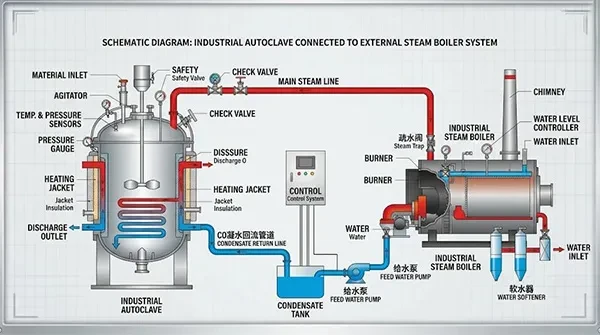
Simply put, a steam boiler generates high-temperature, high-pressure steam, which is delivered via piping to the industrial autoclave. The autoclave then utilizes this steam for sterilization, autoclave curing, vulcanization, or chemical reactions.
Large industrial autoclaves require massive amounts of heat delivered instantaneously, and a steam boiler serves as the source of high-temperature, high-pressure steam. The specific reasons are as follows:
Extremely Fast Heating Rate: Industrial boilers can store large quantities of high-pressure saturated steam in advance. Once the autoclave is sealed and the steam inlet valve is opened, the internal temperature can be raised to 121°C–185°C within 15 to 25 minutes.
Extremely Uniform Heating: When saturated steam condenses, it releases a massive amount of latent heat of vaporization, ensuring uniform heating inside the autoclave and preventing temperature dead zones or incomplete sterilization.
Lower operating costs: For electrically heated autoclaves, transformer capacity upgrade fees and electricity bills are extremely high; in contrast, gas/oil or biomass boilers have lower energy consumption costs.
Centralized steam supply and safety isolation: A single boiler can simultaneously supply multiple autoclaves via a steam distributor, while physically isolating the combustion equipment from the production workshop, thereby enhancing safety.
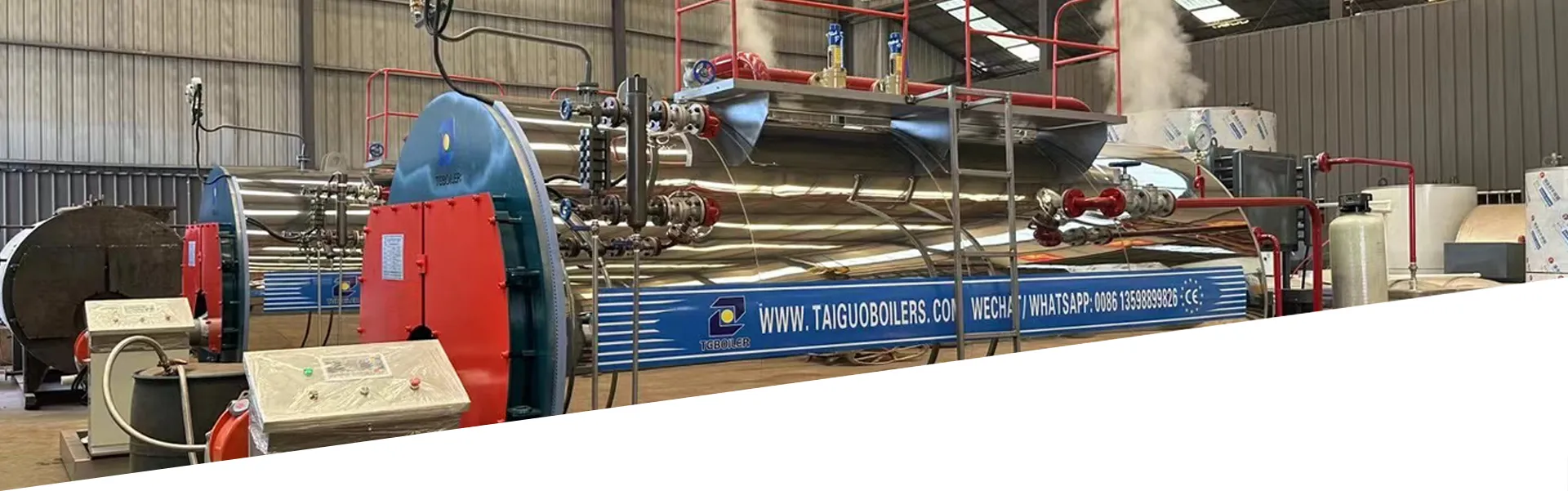
WNS Series Gas & Oil Steam Boilers (Most Popular): Fully automatic operation, thermal efficiency >94%, rapid steam generation, and stable pressure (1.25 MPa); suitable for food canning sterilization and rubber vulcanization.
Electric Steam Generators (starting at 25 kg/h): Zero emissions and extremely compact footprint; suitable for laboratory autoclaves, R&D kitchens, and pilot production lines.
DZL/DZH Series Biomass Steam Boilers: Can burn agricultural and forestry waste such as wood chips, rice husks, palm shells, and sugarcane bagasse; suitable for heavy industrial plants located near raw material sources, offering the lowest fuel costs.
Configuring an external steam boiler for an industrial autoclave essentially involves finding the optimal balance between thermal efficiency, temperature control precision, operational safety, and long-term energy costs. Whether selecting a highly efficient and stable gas-fired steam boiler or a biomass/electric boiler tailored to specific fuels or operating conditions, the key to selection lies in matching the autoclave’s operating pressure, steam production rate, and local energy and environmental requirements.
When selecting a boiler, companies should consider not only the initial purchase price of the equipment but also the insulation of the steam distribution network, condensate recovery, and the proper configuration of safety valves and accessories—all of which determine the long-term operating costs and safety of the entire system.
If you are seeking a steam heat source to power the autoclaves on your production line, or if you have specific requirements regarding boiler capacity or pressure ratings, please feel free to contact us. We will provide you with professional boiler solutions.
Email: info@taiguoboilers.com WhatsApp: +86 13598899826
Tel/Fax: 0086 371 63311291
WhatsApp/WeChat: 0086 13598899826
Email:info@taiguoboilers.com
Add: No.6 Zone, North Side of Konggang No.6 Road, Airport Economy Zone, Zhengzhou City, Henan Province, China




 0086 13598899826
 0086 13598899826
 info@taiguoboilers.com
