
Time: 2026-08-06 Click: 103 seen
In the industrial sector, selecting a fire-tube boiler is a critical step when building new production lines or upgrading equipment. These boilers are favored for their compact design, high thermal efficiency, and ease of installation and maintenance. However, when faced with numerous technical specifications and design options, many companies remain uncertain: What factors should be considered when selecting a fire-tube boiler? TGBOILER will outline the key considerations for selecting a fire-tube boiler.
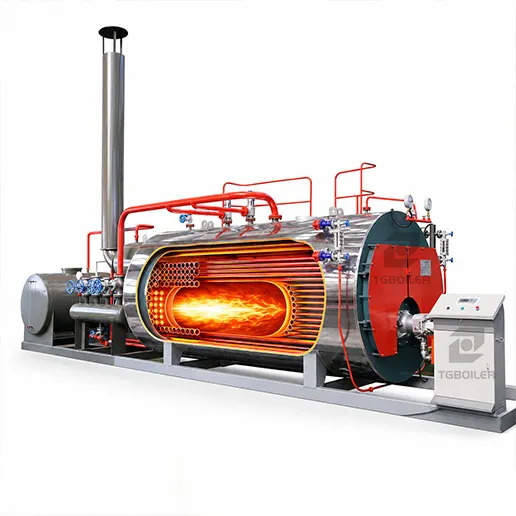
1. Matching Evaporation Capacity: Determine this based on the maximum and average values of actual steam consumption or heating load to ensure the boiler’s output meets demand without waste.
2. Operating Pressure: Identify the steam or hot water pressure required by the system. Fire-tube boilers are typically suitable for medium- and low-pressure environments (generally less than 2.0 MPa / 300 psi).
3. Fuel and Operating Costs: Identify economically viable fuel sources available locally, assess fuel costs, and select a suitable burner.
4. Thermal Efficiency: Consider efficiency at both full and partial loads. Install energy-saving devices (such as condensing flue gas recovery systems) to reduce operating costs and further improve thermal efficiency.
5. Environmental Compliance and Safety Maintenance: Emissions must comply with local environmental regulations; select low-nitrogen combustion technology when necessary.
6. Space Constraints: Fire-tube boilers have a large water capacity and relatively fixed dimensions; therefore, verify the actual floor area, height, and access passage dimensions of the boiler room.
The scientific selection of a fire-tube boiler is a systematic process that requires comprehensive consideration of multiple key factors, including evaporation capacity, operating pressure, fuel type, thermal efficiency, environmental compliance, and site conditions. Incorrect selection not only leads to energy waste but also increases long-term maintenance costs; therefore, it is essential to choose a boiler that meets the enterprise’s actual needs.
TGBOILER holds a National Class A Boiler Manufacturing License as well as international certifications such as ISO, CE, and SGS. As an industrial boiler manufacturer integrating R&D, production, and sales, it provides a reliable manufacturing foundation for fire-tube boiler selection. Its WNS and LHS series fire-tube boilers are widely used in the food and beverage, chemical, pharmaceutical, and light industry sectors, serving as the mainstay equipment in the industrial heating field. The following provides detailed technical references for selecting fire-tube boilers from the perspectives of boiler structure and application case studies.
When selecting fire-tube boilers, the WNS series of prefabricated boilers offers a wide range of applications. This series features a horizontal, internal combustion, three-pass wet-back structure, with capacities ranging from 1 to 20 metric tons per hour for steam boilers and operating pressures from 0.7 to 1.6 MPa.
Key design features include: the first pass consists of a fully corrugated furnace tube, where the corrugated design increases the radiant heat transfer area while effectively absorbing thermal expansion stresses; the second and third passes feature high-efficiency corrugated smoke tubes, allowing flue gases to undergo thorough heat exchange within the tube bundle and significantly enhancing heat transfer efficiency. With an economizer and condenser installed at the boiler tail, flue gas discharge temperature can be reduced to approximately 60°C.
When selecting a fire-tube boiler, the WNS series offers the advantages of a mature design, flexible configuration options, a high degree of automation, and high efficiency and environmental friendliness. It can be equipped with a low-nitrogen burner according to the user’s specific needs and is compatible with various fuels, including natural gas, light diesel oil, and heavy fuel oil. Therefore, when selecting a fire-tube boiler, if a company uses a complex mix of fuels or requires dual-fuel capability for both gas and oil, the WNS series skid-mounted boiler is the preferred solution.
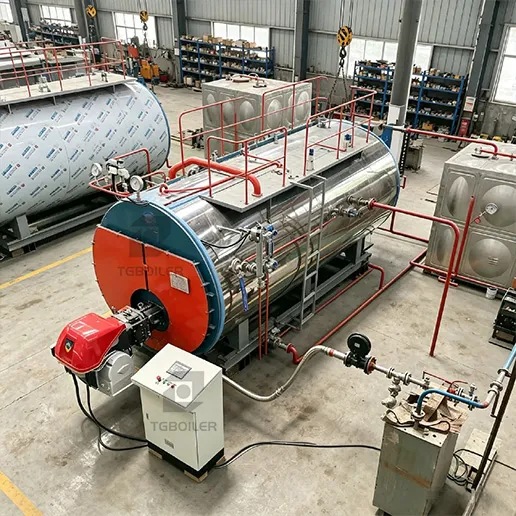
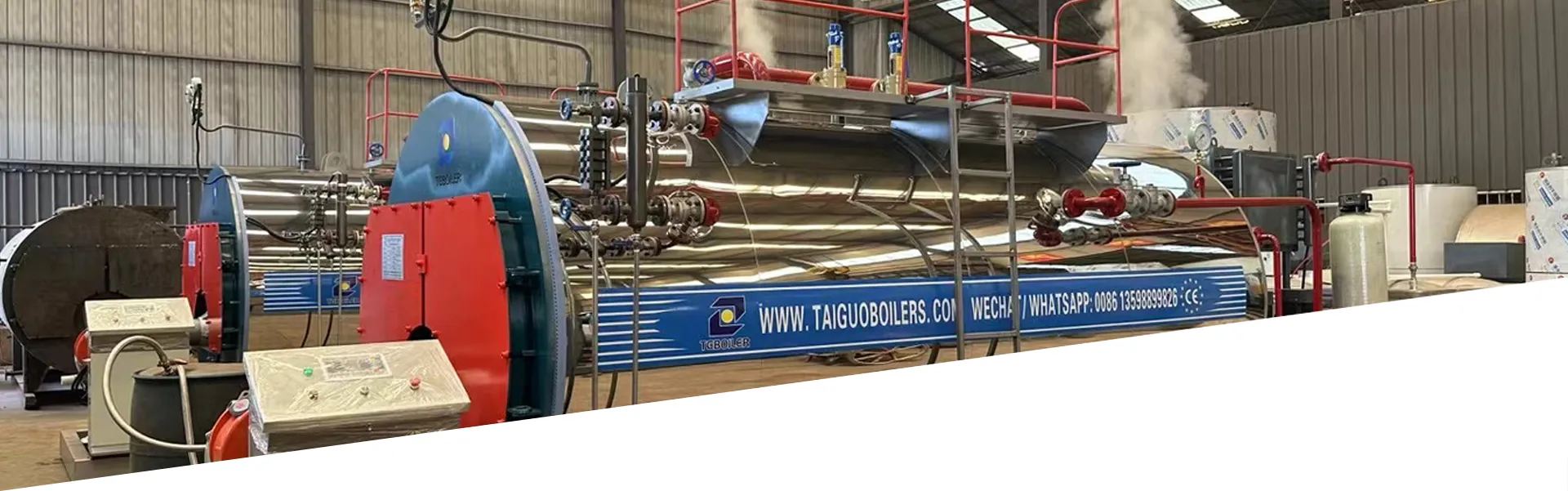
The WNS Series skid-mounted fire-tube boilers integrate the boiler unit, burner, control system, water treatment equipment, and economizer onto a single skid. Piping connections and cold-state commissioning are completed prior to shipment. Once the boiler arrives on-site, it only requires connection to water, electricity, and gas to be commissioned and put into operation, significantly reducing the installation time compared to traditional non-skid boilers. This series is suitable for fire-tube boiler applications where space is limited, rapid commissioning is required, or temporary heating is needed. It is configured in the same manner as quick-assembly products and offers equivalent thermal efficiency and safety standards. For projects with tight schedules and challenging construction conditions, skid-mounted fire-tube boilers are often the preferred choice.
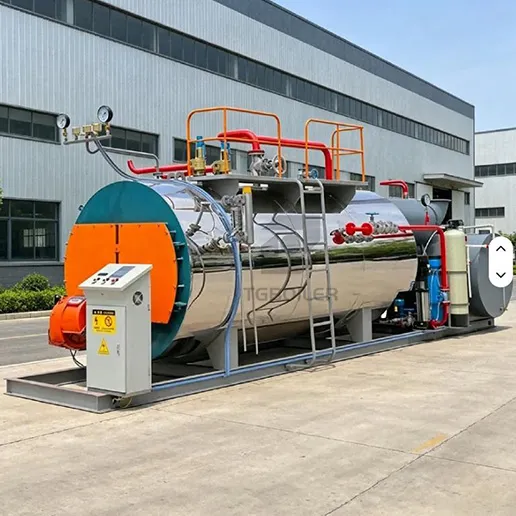
The LHS Series Quick-Install Vertical Fire-Tube Boiler is a compact, small-scale, fully automatic oil (or gas)-fired steam generator that produces steam rapidly. Featuring a vertical fire-tube structure and a large furnace design, it has a small footprint, is easy to transport and install, and is equipped with multiple automatic safety protection functions. It is primarily suitable for small and medium-sized enterprises with limited space and boiler room area.
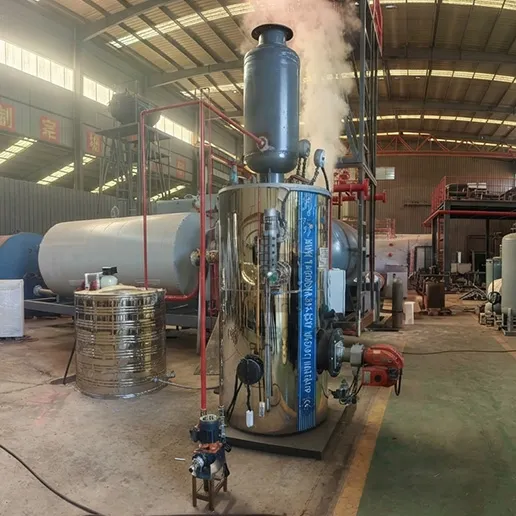
Fire-Tube Boiler Project Case Studies:
One Set 5 Ton/H Gas-Fired Steam Boiler Successfully Finished the Installation in Uzbekistan
2 t/h Natural Gas Fired Steam Boiler for Food Processing Plant in Trinidad and Tobago
1 t/h Vertical Gas Fired Boilers For A Feed Mill In Bulgaria
Tel/Fax: + 86-371-6331 1291
WhatsApp/WeChat: 8613598899826
Email:info@taiguoboilers.com
Add: 13th Floor, Building B, Zhengshang Xuefu Square, No. 277 Boxue Road, Zhengdong New District, Zhengzhou, Henan, China




 8613598899826
 8613598899826
 info@taiguoboilers.com
