
Time: 2026-11-26 Click: 6 seen
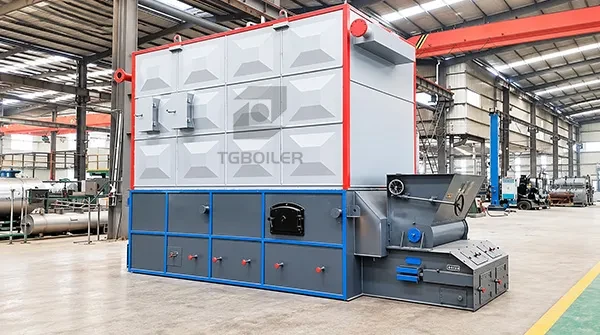
Biomass thermal oil boilers are pieces of equipment that combine biomass fuel combustion technology with thermal oil (organic heat carrier) heating technology. Their core advantages lie in low-pressure, high-temperature heating, stable thermal energy, clean and renewable fuel, and a high degree of automation, making them highly favored by industrial enterprises.
(1) Low-Pressure, High-Temperature Operation: Safe and Reliable: By using thermal oil as a liquid-phase heat transfer medium in a forced circulation system, these boilers can provide stable high-temperature thermal energy ranging from 300°C to 340°C (with some vapor-phase models reaching even higher temperatures) at relatively low operating pressures typically below 1.0 MPa. This reduces the pressure rating requirements and costs of heat-using equipment.
(2) Precise temperature control and stable heat output: Continuous forced circulation via a circulating oil pump ensures uniform and stable temperature control, meeting the temperature-sensitive process requirements of industries such as chemicals, plastics, synthetic fibers, building materials, wood processing, and food production.
(3) Optimized combustion and waste heat recovery design: Given the high volatile matter content of biomass, the furnace design and air supply configuration (such as secondary air, staged/fluidized bed combustion, or specialized furnace arches) facilitate complete combustion while reducing coking and ash buildup; when combined with downstream waste heat recovery devices (such as economizers, air preheaters, or furnace-top coils), thermal efficiency is enhanced and flue gas temperature is reduced.
(4) Renewable Fuel and Low Operating Costs: Renewable biomass fuels such as biomass pellets, wood, rice husks, and agricultural waste can be used, reducing fuel costs in regions with ample fuel supplies.
(5) High Degree of Automation and Easy Maintenance: Modern boilers typically support automatic fuel feeding, ash removal, and soot cleaning, as well as automated control and monitoring systems such as PLC/SCADA, thereby reducing the workload on operators.
1. YGL Series Vertical Biomass Thermal Oil Boiler (Power Range: 120 kW–1,400 kW)
This series features a vertical design that saves floor space, making it ideal for projects with limited plant area. The boiler employs a three-pass design and is equipped with fully corrugated coil heating elements, enabling more precise temperature control. Its highly adaptable combustion system can burn a wide variety of biomass fuels (such as coal, rice husks, nut shells, wood chips, waste wood, logs, and sugarcane bagasse), making it both energy-efficient and environmentally friendly.
2. YL(G)W Series Horizontal Biomass Thermal Oil Boilers (Power Range: 120 kW–14,000 kW)
The YL(G)W Series biomass thermal oil boilers can utilize a variety of biomass fuels, including wood chips, crop straw, rice husks, and peanut shells, ensuring complete fuel combustion and low emissions. High-quality corrugated coils are used inside the boiler to carry the thermal oil, effectively increasing the heat transfer area; the spacing between the coils is designed to fully accommodate thermal expansion and contraction. This boiler system is equipped with an automatic chain grate combustion chamber, which enables automated fuel feeding, combustion, and ash removal, significantly reducing labor costs.
Are you planning to select a new boiler or retrofit an older boiler for energy efficiency? Please provide your steam pressure, tonnage, and fuel preferences, and our thermal engineers will provide you with a free preliminary proposal and energy consumption comparison assessment. Click below to connect with a dedicated representative, or leave a message directly with your operational requirements.
Email: info@taiguoboilers.com WhatsApp: +86 13598899826
Tel/Fax: 0086 371 63311291
WhatsApp/WeChat: 0086 13598899826
Email:info@taiguoboilers.com
Add: No.6 Zone, North Side of Konggang No.6 Road, Airport Economy Zone, Zhengzhou City, Henan Province, China




 0086 13598899826
 0086 13598899826
 info@taiguoboilers.com
