
Time: 2026-05-28 Click: 463 seen
Boilers are critical pieces of equipment in industrial production, providing high-temperature steam or hot water. To ensure proper operation, boilers undergo rigorous safety testing. Hydrostatic testing helps manufacturers verify the integrity and safety of the boiler before it enters routine operation.
A boiler hydrostatic test is a pressure testing method used to verify the integrity of all components within the boiler system. During the test, water is injected into the sealed boiler system and pressurized to 1.5 times the maximum specified operating pressure for a short period. This comprehensively evaluates the strength and sealing performance of the boiler’s overall structure.
As special equipment, industrial boilers operate continuously under high-temperature and high-pressure conditions. To ensure absolute operational safety, hydrostatic testing must be performed before the boiler leaves the factory.
The Importance of Hydrostatic Testing:
I). Verify Structural Strength: The test verifies whether the materials of pressure-bearing components (such as water-cooled walls, superheaters, and headers) meet standards and whether their structural design is sound, ensuring they will not deform or rupture under rated high pressure.
II). Identify Sealing Issues: By pressurizing the system with water, it is possible to precisely inspect all welded joints, flanges, valves, and pipe connections for leaks or leakage points.
III). Compliance Acceptance for New and Modified Equipment: Whether for the installation of a new boiler, major modifications (such as tube bundle replacement), or repairs following a special equipment accident, hydrostatic testing is the most decisive statutory acceptance method under national special equipment inspection regulations.
IV). Pre-Commissioning Acceptance: Whether for new boilers upon delivery and installation, or following major modifications, component replacements, or medium/minor repairs, this is a mandatory statutory safety acceptance procedure, and hydrostatic testing is the most decisive statutory acceptance method under national special equipment inspection regulations.
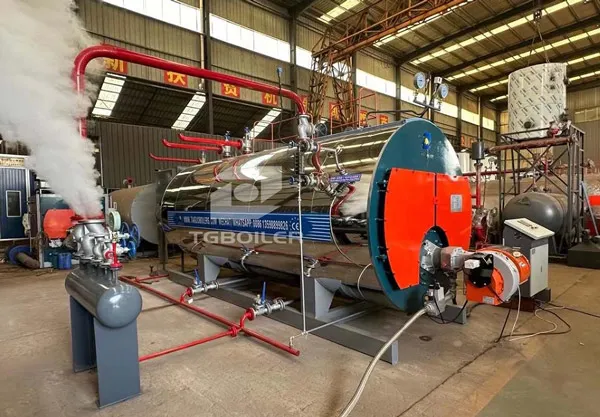
A standard hydrostatic test is a precise, gradual, and strictly monitored process, primarily divided into the following four stages:
I). Preparation & Isolation
System Isolation: Disconnect or isolate pipelines, pressure switches, water columns, and precision instruments such as pressure gauges that cannot withstand high test pressures.
Installation of Pressure Gauges: Install at least two pressure gauges that have passed metrological calibration and have the same measurement range.
II). Filling and Venting
Control Water Temperature: Fill the system with clean, softened water at a temperature between 20°C and 70°C. Water temperatures that are too low or too high can adversely affect the boiler.
Venting: Open the vent valve on the boiler and slowly fill from the bottom until a steady stream of water flows continuously from the vent valve without bubbles, then close the valve.
III). Gradual Pressurization and Pressure Holding
Pressurize in stages: Start the test pump and control the pressurization rate at 0.2–0.3 MPa/min. Pause and inspect when the pressure reaches 10% of the working pressure; after confirming no abnormalities, continue pressurizing to the rated working pressure.
Overpressure Test (as applicable): For newly installed or overhauled boilers, continue increasing pressure to the test pressure (typically 1.25 or 1.5 times the working pressure). Shut off the test pump and maintain the pressure for 20 minutes. During this period, the pressure gauge needle must remain stationary.
IV). Pressure Relief and Comprehensive Inspection (Inspection & Acceptance)
Slowly reduce the pressure back to the rated working pressure, after which inspectors may enter the site.
Acceptance Criteria: No water droplets or mist on the metal walls or welds of any pressure-bearing components; no water leakage from bell mouths or flanges; no residual deformation visible to the naked eye on pressure-bearing components.
Conventional industrial boilers: Hydrostatic tests are generally conducted every 6 years.
Boilers that cannot be inspected internally: For boilers where internal inspection is not possible due to structural limitations or other reasons, the hydrostatic test interval must be shortened to once every 3 years.
Special circumstances: Hydrostatic testing must also be repeated to ensure safety following major repairs, modifications, or when the boiler is recommissioned after being out of service for more than one year.
The boiler may only be put into operation when the internal inspection, external inspection, and hydrostatic test are all within their valid certification periods.
As a leading industrial boiler manufacturer, Henan Taiguo Boiler Manufacturing Co., Ltd. (TGBOILER) matches all our high-efficiency steam, hot water, and thermal oil boiler systems with state-of-the-art auxiliary equipment to guarantee absolute safety and long-term reliability for your plant. Whether you need to upgrade your current system, , or plan a new industrial energy project, our global engineering team is ready to deliver.
📩 [Contact TGBOILER Engineering Team for a Free Custom Solution & Quote]
Tel/Fax: 0086 371 63311291
WhatsApp/WeChat: 0086 13598899826
Email:info@taiguoboilers.com
Add: No.6 Zone, North Side of Konggang No.6 Road, Airport Economy Zone, Zhengzhou City, Henan Province, China




 0086 13598899826
 0086 13598899826
 info@taiguoboilers.com
