
Time: 2026-05-14 Click: 232 seen
With the rapid development of the boiler industry and the global trend toward environmental protection and carbon neutrality, an increasing number of companies are prioritizing energy efficiency and environmental protection as key performance indicators for boiler operations. So, how can steam boilers achieve energy efficiency and environmental protection during operation?
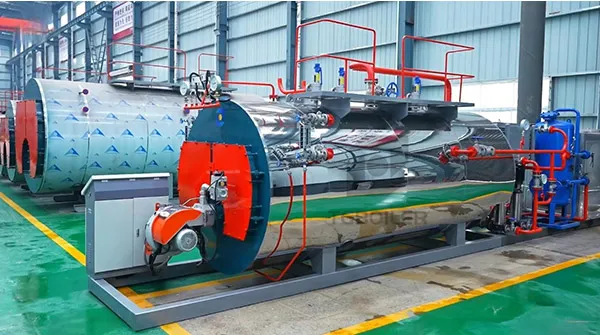
This article explores four key approaches that can help steam boilers reduce costs and improve efficiency.
Establishing a condensate recovery system to return high-temperature condensate to the boiler not only saves energy, water, and electricity but also reduces the consumption of oil and natural gas.
Variable Frequency Drive (VFD) Technology for Auxiliary Equipment: Applying VFD technology to forced draft fans, induced draft fans, feedwater pumps, and other auxiliary equipment allows for speed adjustment based on actual load, achieving electricity savings of 20%–30%.
Installation of Flue Gas Heat Recovery Devices: Installing economizers in the boiler flue to lower flue gas temperature can significantly increase boiler feedwater temperature and reduce energy consumption.
If many boilers rely solely on simple insulation measures, external boiler pipes and equipment will cause heat loss during operation. Therefore, boiler insulation must be strengthened: Apply high-quality insulation to the boiler body, steam pipes, and valves to reduce heat loss.
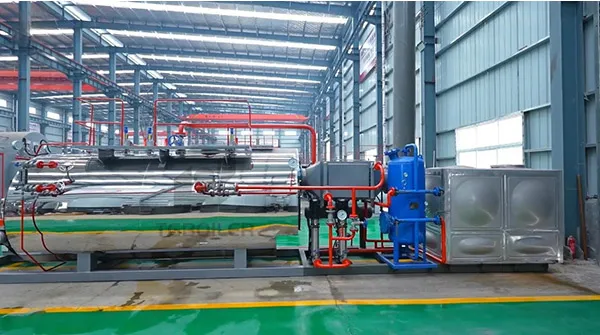
Regular inspection of boilers and auxiliary equipment: Focus primarily on combustion equipment, water level gauges, valves, fans, and other components, and accurately record equipment status for future reference.
Regular maintenance:
Perform regular maintenance on the boiler, inspect the inner wall tubes, verify the condition of auxiliary equipment, and replace parts as necessary. When the boiler is shut down, the boiler operator should perform maintenance in accordance with established procedures.
Regular Removal of Ash and Scale: Coking in the furnace, ash on heat transfer surfaces, and internal scale can severely reduce heat transfer efficiency and must be regularly cleaned and removed.
• Optimize Blowdown: Reasonably control blowdown volume and frequency to minimize heat loss caused by discharging high-temperature boiler water.
• Operational Data Monitoring: Regularly measure flue gas temperature, residual oxygen levels, and fuel consumption to dynamically adjust system operating conditions.
For inquiries regarding boilers, please contact:
Email: info@taiguoboilers.com WhatsApp: +86 13598899826
Youtube Channel:https://www.youtube.com/@tgboiler
Tel/Fax: 0086 371 63311291
WhatsApp/WeChat: 0086 13598899826
Email:info@taiguoboilers.com
Add: No.6 Zone, North Side of Konggang No.6 Road, Airport Economy Zone, Zhengzhou City, Henan Province, China




 0086 13598899826
 0086 13598899826
 info@taiguoboilers.com
