
Time: 2026-08-27 Click: 81 seen
In the dairy industry, various production stages—including the production of pure milk, fresh milk, and powdered milk products—require high-temperature steam for manufacturing and processing, and boilers are the core equipment for providing high-quality steam. So, how should dairy companies choose a boiler? What factors should they consider when selecting one?
As a professional boiler manufacturer, TGBOILER has extensive project experience in the dairy industry. Below, we will outline the key factors to consider when selecting a boiler for the dairy industry.
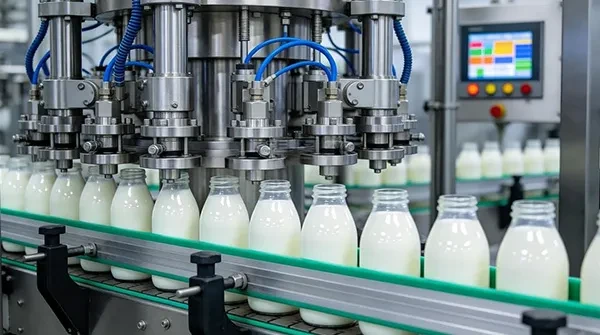
Calculate the actual steam demand based on the actual steam consumption of processes such as pasteurization, sterilization, concentration, and spray drying at the dairy plant. At the same time, allow for a safety margin of 15% to 20% to meet future production needs.
Small-scale dairy processing plants typically opt for boilers with a capacity of 2–6 metric tons per hour; large-scale dairy enterprises, on the other hand, require modular, intelligent steam supply systems with capacities ranging from 10 metric tons to several dozen metric tons per hour.
Gas-Fired Steam Boilers:Fueled by natural gas, these boilers are clean and environmentally friendly, with thermal efficiency reaching over 98%. They feature a high degree of automation and fully meet the hygiene and low-emission requirements of dairy processing, making them the preferred choice for dairy plants.
Biomass Boilers: Ideal for plants located near agricultural or forestry areas that pursue carbon-neutral operations and aim to reduce long-term fuel costs, as these regions have abundant biomass fuel resources and low fuel costs.
Electric Boilers: Electric boilers offer precise temperature control, zero pollution, and high thermal efficiency, but their operating costs are relatively high;
Food-Grade/Pure Steam: Dairy processing directly impacts food safety and imposes high demands on boiler water quality and steam quality. A leak-proof water treatment system must be installed to prevent contamination by impurities.
Environmental Protection and Low-Nitrogen Standards: Must comply with local environmental regulations by selecting low-nitrogen combustion technology (nitrogen oxide emissions typically must be below 30 mg/m³ or 20 mg/m³).
Automation and Temperature Control: Since dairy production loads fluctuate rapidly, it is necessary to select a boiler system with a high degree of intelligence and precise pressure and temperature control.
Energy is the largest variable cost in industrial boiler operation. Modern dairy plants should specify boilers equipped with the following devices:
Integrated economizer/condenser: Recovers waste heat from flue gases to preheat boiler feedwater, increasing the overall system efficiency by 4% to 8%.
Variable Frequency Drive (VFD) blower: Precisely matches the combustion airflow to steam demand.
Advanced PLC automation system: Ensures automatic blowdown control, TDS monitoring, and adjustable burners to achieve seamless load tracking.
Dairy companies can select the most suitable boiler based on a comprehensive assessment of factors such as steam demand, fuel type, efficiency, automation, and maintenance. Choosing the right steam boiler is critical to ensuring a stable steam supply, high-quality product output, and reduced fuel costs.
With its advanced technology, customized solutions, and extensive industry experience, TGBOILER provides ISO-compliant, CE-certified steam and hot water boiler solutions to dairy producers worldwide.
For more information about boilers, please contact:
Email: info@taiguoboilers.com
WhatsApp: +86 13598899826
Tel/Fax: + 86-371-6331 1291
WhatsApp/WeChat: 8613598899826
Email:info@taiguoboilers.com
Add: 13th Floor, Building B, Zhengshang Xuefu Square, No. 277 Boxue Road, Zhengdong New District, Zhengzhou, Henan, China




 8613598899826
 8613598899826
 info@taiguoboilers.com
