
Time: 2026-08-20 Click: 96 seen
In the rice processing industry, steam boilers are essential equipment for drying rice, processing parboiled rice, and providing heat to factory facilities. When selecting a boiler for a rice mill, it is necessary to consider various factors, including steam load, fuel costs, environmental standards, and process requirements. Choosing the right boiler can help improve production efficiency, reduce fuel costs, enhance the quality of finished rice, and ensure a stable supply of thermal energy.
During rice processing, different processes have varying requirements for steam pressure and temperature:
Parboiled Rice Processing: This is the stage with the highest heat consumption in a rice mill, requiring large amounts of saturated steam for soaking, steaming, and heating the paddy rice. It demands extremely high stability and purity of steam, typically requiring saturated steam at 0.6–1.0 MPa.
Drying Operations: After steaming or washing, the paddy has an extremely high moisture content. Continuous, stable, low-pressure saturated steam or hot air must be supplied via steam heat exchangers or hot air furnaces to dry the grain, reduce moisture content, and preserve quality.
Determining Evaporation Capacity: Based on hourly throughput, peak load, and pipeline heat loss, precisely calculate the required boiler capacity (e.g., 2 t/h, 4 t/h, or larger) to avoid excess steam production or insufficient steam supply.
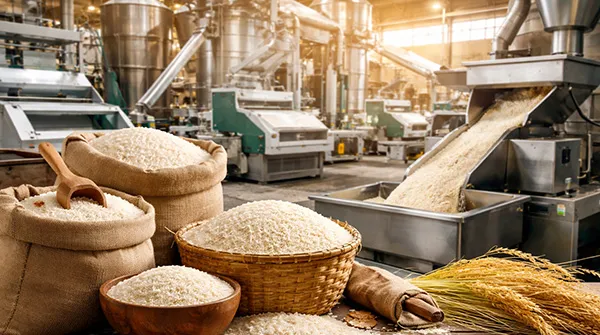
Biomass Rice Husk Boilers: Rice mills generate large amounts of waste rice husks for every metric ton of paddy rice processed. Selecting a chain grate or reciprocating furnace capable of directly burning rice husks or biomass pellets can significantly reduce operating costs and resolve waste disposal issues.
Natural Gas/Fuel Oil Boilers: These offer good environmental performance and a high degree of automation, but their operating costs are highly susceptible to fuel price fluctuations. They are suitable for regions with strict environmental policies and ample supplies of natural gas and petroleum.
Capacity Matching: For a typical parboiled rice processing line, approximately 0.3–0.5 metric tons of steam is required per metric ton of rice; for drying lines, a safety margin of 15%–20% should be allocated in advance based on variations in initial moisture content.
Pressure Selection: Low- to medium-pressure steam boilers operating at 0.7 MPa to 1.25 MPa are typically sufficient to meet the vast majority of rice processing needs.
Rice husks have high ash content, are lightweight, and are prone to coking; therefore, the following considerations are essential when selecting a rice husk boiler:
Anti-coking Design: The furnace must be sufficiently large and equipped with an appropriate air ratio (primary air to secondary air).
High-Efficiency Dust Removal System: Since rice husk combustion produces a large amount of particulate matter, the system must be equipped with high-efficiency industrial dust removal, desulfurization, and denitrification devices to ensure flue gas emissions comply with local environmental regulations.
Automatic Ash Removal and Feeding: Due to the low specific gravity of rice husks, a screw feeder or pneumatic conveying system must be installed, coupled with a continuous ash removal system.
| Boiler Type | Advantages | Disadvantages | Applicable Scenarios |
| Rice Husk Chain Grate Boiler | Mature structure, simple operation, direct burning of raw rice husks | Slightly lower efficiency than gas/oil fired steam boiler | Small and medium rice processing plants (1–10 t/h steam) |
| Gas/Oil Fired Steam Boiler | Small footprint, fast start/stop, high level of automation | High fuel costs, unable to utilize rice husk waste | Areas with no rice husk storage space or extremely strict environmental regulations |
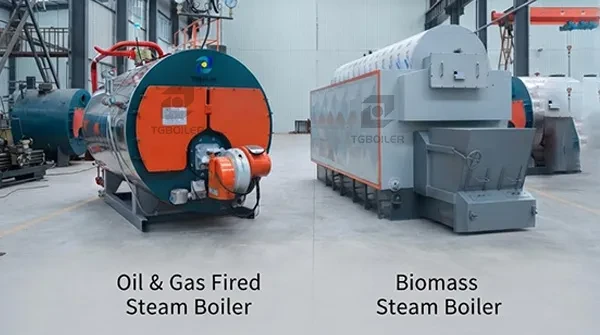
Investing in the right boiler is not only an upgrade to the production line but also key to a rice processing plant’s ability to reduce costs, improve efficiency, and achieve green, sustainable development. By making effective use of byproducts such as rice husks, the plant can lower fuel costs and ensure the stable and efficient operation of all production processes.
Before selecting a boiler model, it is essential to engage in in-depth discussions with an experienced, professional boiler manufacturer, taking into account the plant’s actual daily output, peak steam demand, and local environmental regulations, in order to develop a customized, cost-effective, and reliable heating system solution.
For more information about rice mill boilers, please contact:
Email: info@taiguoboilers.com
WhatsApp: +86 13598899826
Tel/Fax: + 86-371-6331 1291
WhatsApp/WeChat: 8613598899826
Email:info@taiguoboilers.com
Add: 13th Floor, Building B, Zhengshang Xuefu Square, No. 277 Boxue Road, Zhengdong New District, Zhengzhou, Henan, China




 8613598899826
 8613598899826
 info@taiguoboilers.com
