
Time: 2026-05-07 Click: 215 seen
The sugar refining process is highly dependent on thermal energy. As the core driving equipment, boilers provide indispensable and stable steam support for heating, evaporation, crystallization, and purification processes.
However, many sugar refineries face a critical challenge when selecting a boiler: how to choose a boiler system that balances performance, fuel costs, and environmental requirements?
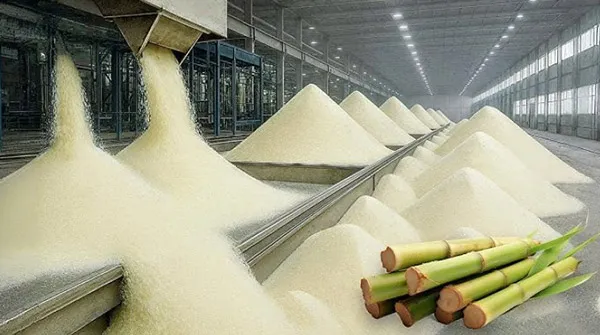
1. Determining Key Parameters
(1) Steam Volume: Clearly define the steam requirements for production.
(2) Pressure and Temperature: The sugar manufacturing process typically requires medium- to high-pressure steam to improve efficiency.
2. Fuel Type and Flexibility
(1) Bagasse
One of the greatest advantages of sugar mills is their abundant fuel resource—bagasse.
Advantages of bagasse: a renewable resource that enables energy self-sufficiency, is environmentally sustainable, reduces waste disposal pressure, and significantly lowers operating costs
(2) Other Fuels
At the start of the season, supplementary combustion using coal, biomass, or natural gas boilers may also be considered.
3. Common Types of Sugar Mill Boilers
(1) Biomass Boilers (Bagasse Boilers)
Sugar mills have a large supply of fuel (bagasse). Using biomass boilers (chain grate or circulating fluidized bed) not only utilizes waste but also significantly reduces fuel costs. They are energy-efficient and environmentally friendly, aligning with green development trends.
Suitable scenarios:
Suitable for sugar mills with a stable supply of bagasse.
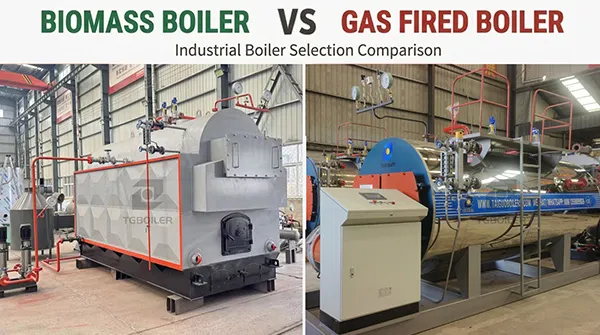
Gas boilers are typically used as backup boilers or in regions with high environmental standards.
Gas boilers feature high thermal efficiency (up to 95% or higher), clean combustion, low emissions, a high degree of automation, and simple operation.
Suitable Applications:
Suitable for sugar mills located near urban areas or in regions with strict environmental regulations.
4. Degree of Automation:
Advanced Combustion Control: Automatically adjusts the air-fuel ratio to achieve optimal efficiency.
PLC Intelligent Control System: A programmable logic controller (PLC) combined with a human-machine interface (HMI) screen enables real-time monitoring of steam pressure, temperature, and water level. The PLC intelligent control system enhances safety and reduces labor costs.
5. Environmental Protection: Must meet local emission standards (e.g., nitrogen oxides, dust, etc.)
Emission Limits: Ensure the selected boiler complies with local environmental regulations for flue gas emissions. Choose a boiler equipped with built-in advanced control systems for nitrogen oxides, sulfur oxides, and particulate matter.
For sugar mills, bagasse biomass boilers represent the most economical and sustainable choice; under specific conditions, gas-fired boilers serve as a cleaner and more efficient complementary solution.
In summary, the selection of boilers for sugar mills should comprehensively consider factors such as fuel resources, production scale, and environmental requirements. Appropriate boiler selection not only reduces operating costs but also significantly improves production efficiency, providing a strong foundation for the enterprise’s long-term development.
📩 Get Sugar Mill Boiler Solutions
If you are planning or upgrading a sugar mill boiler system, please provide details on fuel type, production capacity requirements, and project specifics, and we will provide a professional, customized solution.
👉 Please contact us for selection advice and quotation support.
Email: info@taiguoboilers.com
WhatsApp: +86 13598899826
Tel/Fax: 0086 371 63311291
WhatsApp/WeChat: 0086 13598899826
Email:info@taiguoboilers.com
Add: No.6 Zone, North Side of Konggang No.6 Road, Airport Economy Zone, Zhengzhou City, Henan Province, China




 0086 13598899826
 0086 13598899826
 info@taiguoboilers.com
