
Time: 2026-06-25 Click: 675 seen
In the production process of a palm oil mill, the boiler is the most critical power-generating equipment. From the steaming and pressing of palm fruits to refining, every stage requires a large amount of low-pressure saturated steam; therefore, selecting the right boiler is crucial for a palm oil mill.
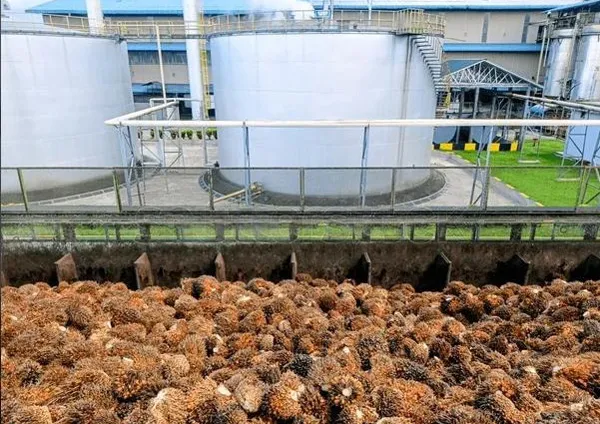
The palm oil processing process generates large amounts of solid waste: palm shells, palm fibers, and empty fruit bunches.
Key Advantage: Low fuel cost
By utilizing readily available palm fiber and palm kernel shells as fuel, these boilers not only achieve zero fuel costs but also resolve waste disposal issues, fully meeting the requirements of environmental sustainability and a circular economy.
For conventional processing scales ranging from 10 tons to 40 tons, the SZL-type chain grate biomass boiler is by far the most widely used.
Large Combustion Chamber Design: Palm fiber is extremely light and has high moisture content, making it difficult to achieve complete combustion in traditional combustion chambers. The SZL series features a combustion chamber that has been specifically designed to be taller and larger; combined with a powerful secondary air system, this allows the lightweight fiber to burn while suspended in the air.
Continuous Automatic Ash Removal: Palm waste produces a significant amount of ash upon combustion. The chain grate enables automatic, continuous ash removal and dust extraction, ensuring 24-hour continuous operation without the fire going out.
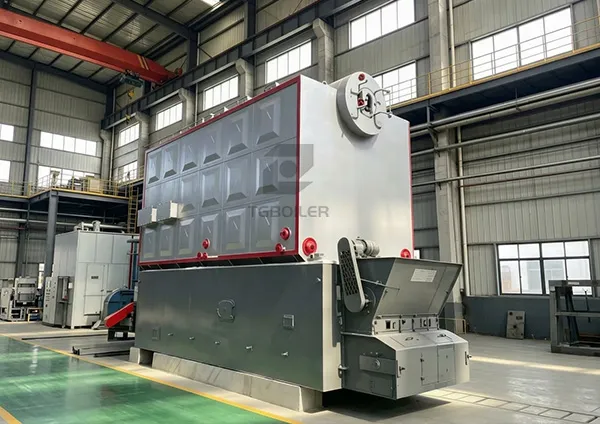
Most palm oil mills do not require high steam pressure during processing; the standard operating pressure is 1.25 MPa or 1.6 MPa, and the saturated steam output is sufficient to meet the needs of their production lines.
The evaporation capacity (tonnage) of an industrial boiler is calculated based on the plant’s hourly processing capacity of fresh fruit bunches (FFB).
Industry Standard Calculation Guidelines:
Under conventional processes, processing 1 metric ton of fresh fruit bunches (FFB) requires approximately 0.5 to 0.7 metric tons of steam. To ensure a stable heat supply during peak production periods or when boiler thermal efficiency fluctuates, the industry-standard formula for calculating boiler tonnage is:
Total Boiler Capacity = FFB hourly processing capacity × 0.65 (average steam consumption coefficient) × 1.2 (safety factor)
To assist palm oil mills in making informed decisions, we have compiled the following table of plant sizes and corresponding boiler configurations:
| Mill Scale (FFB Processing Capacity) | Total Steam Demand per Hour | Recommended Boiler Configuration (Considering Backup & Expansion) | Recommended Boiler Type |
Small Scale (1 ~ 5 TPH FFB) | 0.5 ~ 3.5 Ton/h | 1 unit of 2 Ton/h or 4 Ton/h | DZH Series Hand-fired / Moving Grate Biomass Boiler |
Medium-Small Scale (6 ~ 10 TPH FFB) | 3 ~ 7 Ton/h | 1 unit of 5 Ton/h or 8 Ton/h | SZL Series Double-Drum Chain Grate Biomass Boiler |
Medium-Large Scale (10 ~ 20 TPH FFB | 5 ~ 14 Ton/h | 1 unit of 15 Ton/h or 2 units of 10 Ton/h | SZL Series or Packaged Water Tube Biomass Boiler |
Large Scale (with Co-generation) (30 ~ 60 TPH FFB) | 15 ~ 45 Ton/h | 2 units of 25 Ton/h or 2 units of 30 Ton/h | Corner Tube Biomass Boiler / Field-Erected High-Pressure Water Tube Boiler |
Selecting the appropriate boiler capacity and operating parameters for a palm oil mill can not only significantly improve overall thermal efficiency but also avoid the substantial capital waste resulting from selecting equipment that is either too large or too small.
If you are planning to build or expand your palm oil processing plant in Indonesia, Malaysia, Nigeria, or Colombia, and have questions regarding specific boiler capacity calculations, basic drawings, or boiler selection, please feel free to contact our technical experts at any time.
Email: info@taiguoboilers.com WhatsApp: +86 13598899826
Tel/Fax: + 86-371-6331 1291
WhatsApp/WeChat: 8613598899826
Email:info@taiguoboilers.com
Add: 13th Floor, Building B, Zhengshang Xuefu Square, No. 277 Boxue Road, Zhengdong New District, Zhengzhou, Henan, China




 8613598899826
 8613598899826
 info@taiguoboilers.com
