
Time: 2026-01-22 Click: 505 seen
Which is more cost-effective for enterprises in 2026: gas boilers or biomass boilers? This decision depends on a number of factors, including operational costs , environmental requirements, investment budgets,
and fuel availability. Although gas boilers offer advantages in terms of cleanliness and efficiency, they are susceptible to gas supply disruptions. Biomass boilers are environmentally friendly and renewable, but
solutions are needed for fuel collection, storage and ash disposal.
In recent years, with stricter environmental regulations and advancements in biomass utilization technology, both approaches have their respective advantages.
| Feature | Gas-Fired Boiler | Biomass-Fired Boiler |
| Advantages | Clean, high automation, compact, low initial investment. | Renewable, lower fuel cost, carbon-neutral potential |
| Challenges | Vulnerable to gas price fluctuations & supply stability. | Requires fuel storage, ash handling, and stable supply chains. |
| Efficiency | Extremely High (95%+) | High (85% - 90%) |
| Maintenance | Minimal | Moderate (Regular de-ashing required) |
1. For enterprises prioritizing high efficiency, ease of operation, and stable natural gas pipeline coverage, gas-fired boilers are recommended.
2. For enterprises with access to agricultural and forestry resources, committed to long-term environmental benefits, and possessing fuel supply and ash disposal capabilities, biomass boilers are recommended.
Amid increasingly stringent global environmental regulations, biomass boilers offer significant advantages in terms of sustainability and compliance with green energy regulations. However, gas boilers remain the optimal choice for factories that prioritise convenience and low upfront costs.
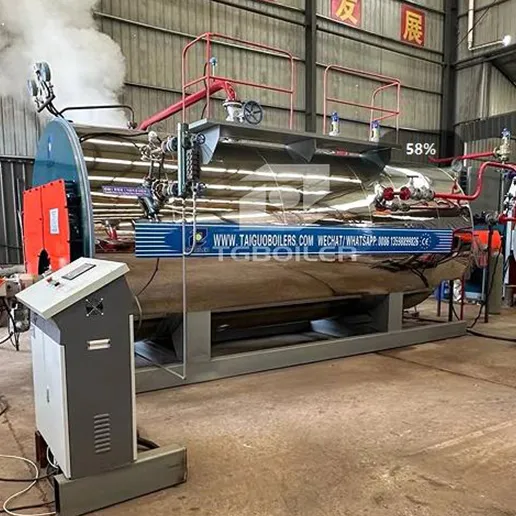
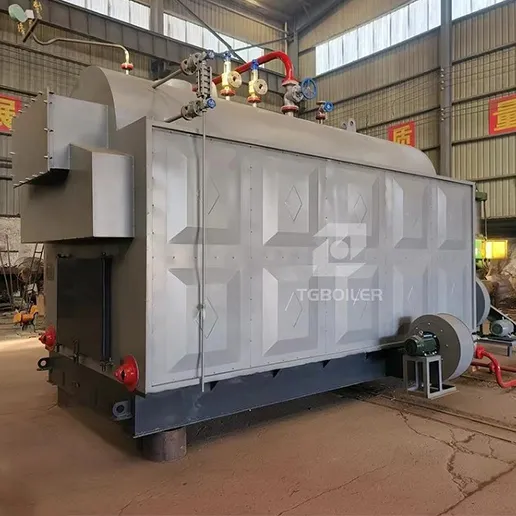
If you want to know more information about gas fired boilers and biomass boiler, please contact:
Email: info@taiguoboilers.com
WhatsApp: +86 13598899826
Tel/Fax: 0086 371 63311291
WhatsApp/WeChat: 0086 13598899826
Email:info@taiguoboilers.com
Add: No.6 Zone, North Side of Konggang No.6 Road, Airport Economy Zone, Zhengzhou City, Henan Province, China




 0086 13598899826
 0086 13598899826
 info@taiguoboilers.com
