
Time: 2026-11-05 Click: 1 seen
Industrial boiler retrofitting refers to the process of upgrading existing boiler equipment—without automatically replacing pressure vessels—with a focus on addressing heat loss issues.
Energy-efficient retrofits for industrial boilers center on three key areas: burner optimization, waste heat recovery via economizers, and the intelligent upgrading of control systems. Through systematic, integrated retrofits, companies can effectively improve combustion efficiency and significantly reduce overall energy consumption and pollutant emissions.
(1) Core Function: Improve the mixing of fuel and air to achieve more complete combustion while reducing emissions of pollutants (such as NO₃).
(2) Energy-Saving Retrofit Approaches:
Low-NOx Burner Upgrades: For gas- or oil-fired industrial boilers, replace burners with high-efficiency, low-NOx models; adjust the air distribution structure; and optimize the air-to-fuel ratio to maintain high combustion efficiency while reducing nitrogen oxide emissions.
Optimization of Layer-Fired/Fluidized-Bed Combustion: Improve coal feeding equipment and air distribution systems to ensure more uniform fuel distribution across the grate or bed material, thereby reducing heat loss from incomplete combustion.
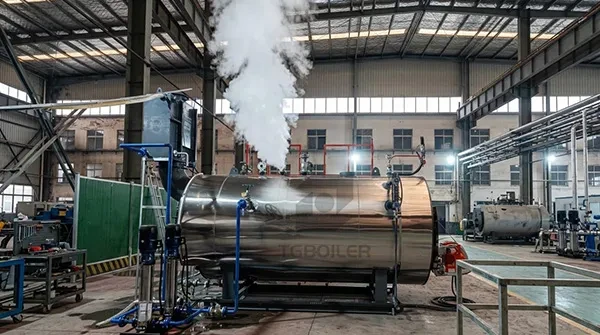
(1) Core Function: Utilize the waste heat from the boiler’s flue gases to heat feedwater and lower flue gas temperature, thereby significantly improving boiler thermal efficiency.
(2) Energy-Saving Retrofit Approaches:
Heat Transfer Surface Retrofits: Adopt new types of economizers and air preheaters (such as fin-tube or heat-pipe types) to fully recover waste heat from the boiler’s flue gases, lower flue gas temperature, and enhance heat absorption.
Ash Prevention and Soot Blowing Technologies: Integrate technologies such as shock wave generators or acoustic soot blowers to periodically remove ash and coke deposits from the economizer surface, preventing a decline in heat transfer efficiency caused by ash buildup.
(1) Core Function: Acting as the boiler’s “AI brain,” it enables automated, precise closed-loop control across the entire load range.
(2) Energy-Saving Retrofit Directions:
Automated DCS/PLC Control: Enables closed-loop automatic regulation of the excess air coefficient, coal feed rate, and feedwater flow rate, thereby avoiding heat loss caused by manual, crude operation.
Variable-Frequency Drive (VFD) and Auxiliary Equipment Coordination: Implement VFD speed control retrofits for high-power auxiliary equipment such as feedwater pumps, blowers, and induced draft fans, enabling dynamic adjustment of airflow and water flow based on actual load. This typically reduces electricity consumption by 20%–40%.
Energy-saving retrofits for industrial boilers primarily enhance combustion efficiency and waste heat recovery capacity through the coordinated optimization of burners, economizers, and control systems.
For more information about boilers and boiler parts, please contact:
Email: info@taiguoboilers.com
WhatsApp: +86 13598899826
Tel/Fax: 0086 371 63311291
WhatsApp/WeChat: 0086 13598899826
Email:info@taiguoboilers.com
Add: No.6 Zone, North Side of Konggang No.6 Road, Airport Economy Zone, Zhengzhou City, Henan Province, China




 0086 13598899826
 0086 13598899826
 info@taiguoboilers.com
