
Time: 2026-04-23 Click: 226 seen
When selecting a suitable boiler for a furniture factory, the key considerations include heating requirements, energy costs, boiler design, space constraints, and environmental regulations. Given the unique nature of furniture production—such as wood drying and hot press operations—the following guidelines will assist in choosing the right boiler.
Application and Medium: Furniture factories typically require high-pressure steam (for wood drying and hot press machines). For hot pressing processes, choose a thermal oil heater; for wood drying, choose a steam boiler.
Boiler Capacity (Evaporation Rate/Rated Power): Calculate the total boiler tonnage required (e.g., 2 tons, 4 tons, 8 tons) based on the volume of wood to be dried or the number of hot press machines.
Temperature and Pressure: Determine the steam pressure and temperature required for the production process to ensure the boiler can meet peak demand.
Biomass Boiler(Recommended): Furniture factories typically generate large amounts of wood waste, such as sawdust and wood shavings. Utilizing a biomass boiler to burn these waste materials reduces fuel costs while promoting environmental sustainability.
Natural Gas Boiler: Clean and environmentally friendly with a high degree of automation, suitable for regions with strict environmental regulations. However, local natural gas supply must be considered.
Electric Boiler: Most environmentally friendly with zero emissions, but relatively high operating costs; suitable for small-scale or low-load applications.
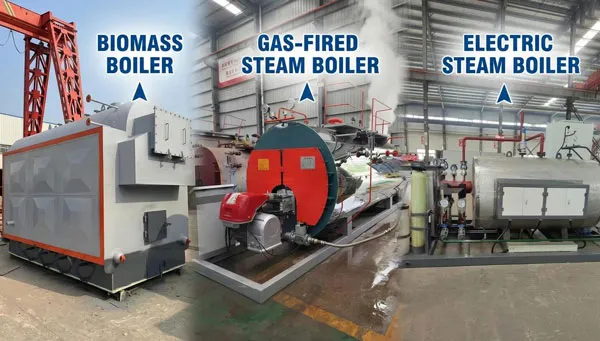
Structure Type: Furniture factories are advised to prioritize water-tube and fire-tube combination boilers or fire-tube boilers, as these offer high structural strength and ensure a stable steam supply.
Technical Requirements: Since steam demand in furniture factories fluctuates, it is recommended to select boilers with high thermal efficiency and rapid steam generation capabilities.
Environmental Compliance: Whether using biomass or gas-fired boilers, emissions of nitrogen oxides and dust must meet regulatory standards. It is recommended to select equipment equipped with high-efficiency dust removal and flue gas purification systems; if using wood waste, proper fuel pretreatment and ash disposal must also be ensured.
Cost Control: Prioritize energy-efficient boilers with a thermal efficiency of 90% or higher, and combine them with technologies such as waste heat recovery to reduce energy consumption and improve overall production efficiency.
Reputable Manufacturers: As boilers are classified as special equipment, it is essential to select manufacturers with national licensing qualifications to ensure equipment quality and safety.
Spare Parts and Maintenance: Industrial boilers operate continuously, requiring manufacturers to provide rapid maintenance and spare parts replacement services to minimize downtime.
Determine the boiler’s external dimensions and installation method based on the available space in the boiler room.
For furniture factories, boiler selection primarily depends on scale, environmental requirements, and fuel availability: Enterprises with access to waste materials such as wood chips should prioritize high-efficiency biomass boilers, which offer greater economic and environmental benefits; if environmental standards are strict or the facility is located in a suburban area, natural gas boilers are more suitable.
Generally, small furniture factories often use small biomass or electric boilers, while medium and large enterprises tend to opt for biomass steam boilers or gas-fired steam/thermal oil boilers to meet stable and efficient production demands.
Whether you are looking to upgrade your current system, or plan a new industrial energy project, our global engineering team is here to help.
📩 [Contact TGBOILER Engineering Team for a Free Custom Solution & Quote]
Email: info@taiguoboilers.com WhatsApp: +86 13598899826
Tel/Fax: 0086 371 63311291
WhatsApp/WeChat: 0086 13598899826
Email:info@taiguoboilers.com
Add: No.6 Zone, North Side of Konggang No.6 Road, Airport Economy Zone, Zhengzhou City, Henan Province, China




 0086 13598899826
 0086 13598899826
 info@taiguoboilers.com
