
Time: 2026-05-07 Click: 287 seen
In the sugar industry, boiler systems are core energy equipment, and the choice of boiler directly impacts production efficiency and operating costs. With changes in the energy mix and increasing environmental requirements, sugar mills typically face a critical decision when selecting boilers: should they use their own bagasse fuel, or adopt a cleaner gas-fired solution?
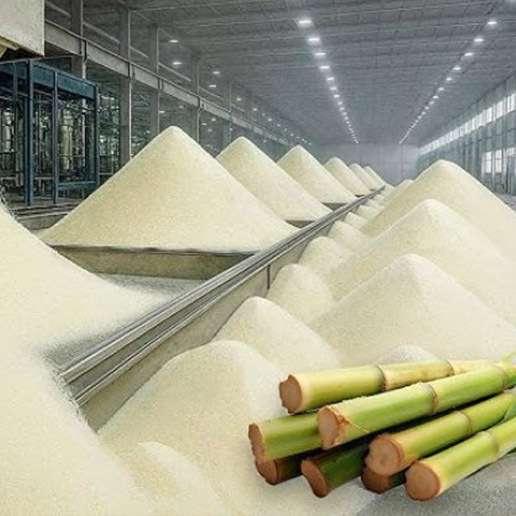
This article analyzes bagasse boilers and gas-fired boilers from the perspectives of cost, environmental sustainability, and operational methods, enabling companies to select the boiler type best suited for their long-term development.
| Comparison Factors | Biomass / Bagasse-fired Boiler | Gas-fired Boiler |
| Fuel Source | Sugar mill Bagasse; nearly zero fuel cost. | Dependent on natural gas pipelines; susceptible to market price fluctuations |
| Initial Investment (CAPEX) | Higher (Includes feeding, dust collection, and ash handling systems). | Lower (Compact structure, fast installation) |
| Operating Cost | Extremely Low; offers a very high Return on Investment (ROI) | Higher; depends on local natural gas pricing |
| Environmental Emissions | Requires high-efficiency dust collectors; considered carbon-neutral energy | Ultra-low emissions; clean energy with simple maintenance |
| Level of Automation | Moderate; requires monitoring of fuel supply and ash removal | Extremely High; supports fully automated, unattended operation |
| Footprint | Large (Requires fuel storage) | Small (Compact design) |
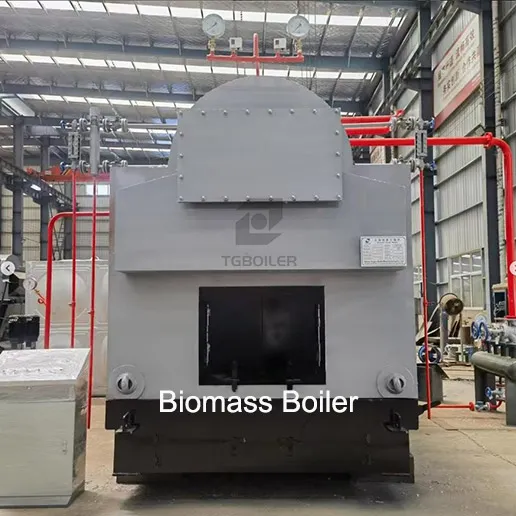
The sugarcane bagasse boiler is the preferred choice for sugar mills. It utilizes the waste generated after sugarcane juice extraction as fuel, enabling the recycling of energy.
Key Advantages
Circular Economy: Creates a closed-loop cycle of “raw materials—sugar production—waste—energy,” reducing waste accumulation and disposal pressures.
Environmentally Friendly: Utilizes renewable energy to reduce carbon emissions.
Suitable for Combined Heat and Power (CHP): Sugar mills can achieve self-sufficiency in electricity and steam, and even feed excess electricity into the grid.
Mature Technology: Modern reciprocating or chain grate technology effectively addresses the challenges of burning sugarcane bagasse, which has high moisture content and large volume.
Suitable for medium-to-large-scale sugar mills with a stable supply of sugarcane bagasse, particularly those engaged in large-scale continuous production.
Technical Challenges
• Moisture Control: Sugarcane bagasse has a high moisture content, typically requiring a special furnace arch design and secondary air arrangement to aid combustion.
• Maintenance Requirements: Compared to gas-fired boilers, there is a higher risk of ash buildup and wear on the heat transfer surfaces, necessitating regular cleaning.
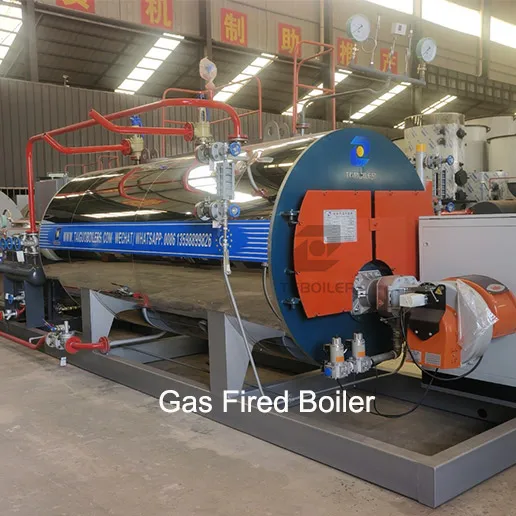
In regions with abundant natural gas resources or extremely strict environmental policies, gas boilers are the ideal choice. Known for their clean and efficient operation, they are common heating equipment in modern industry.
Key Advantages
High Thermal Efficiency: When paired with economizers and condensers, thermal efficiency can exceed 98%.
Quick Start-up and Shutdown: Capable of rapidly responding to changes in production load, making it highly suitable for sugar mills with seasonal operations.
High Degree of Automation: Simple operation, low operating and maintenance costs, and high safety performance.
Compact Footprint: Compact structure, small footprint, and space-saving design.
Clean and Environmentally Friendly: Natural gas is a clean fuel with minimal environmental impact.
Limitations
Operating costs: If local natural gas prices are high, long-term fuel costs will far exceed those of sugarcane bagasse.
Resource dependency: A stable supply of natural gas via pipeline is essential.
Suitable Applications:
Suitable for regions with high environmental standards or sugar mills unable to secure a stable supply of biomass fuel; also commonly used as backup boilers.
When selecting a boiler, sugar mills should make a comprehensive assessment based on their specific conditions:
(1) Prioritize bagasse-fired boilers if:
There is a stable supply of bagasse
The goal is to reduce long-term fuel costs
The mill is large-scale and operates continuously
(3) Prioritize gas-fired boilers if:
Environmental standards are extremely stringent
The facility is located in an urban area or an emission-restricted zone
There is no stable supply of biomass fuel
(3) Hybrid Solution:
Some sugar mills adopt a “bagasse boiler + gas-fired standby boiler” combination to achieve both stability and flexibility.
What is the current capacity of your sugar mill (in tons per hour of steam demand), and what are the fuel prices in your region?
📩 Send an inquiry now to receive a customized solution and quote!
We will recommend the most suitable boiler model for you within 24 hours.
Email: info@taiguoboilers.com WhatsApp: +86 13598899826
Tel/Fax: 0086 371 63311291
WhatsApp/WeChat: 0086 13598899826
Email:info@taiguoboilers.com
Add: No.6 Zone, North Side of Konggang No.6 Road, Airport Economy Zone, Zhengzhou City, Henan Province, China




 0086 13598899826
 0086 13598899826
 info@taiguoboilers.com
