
Time: 2026-01-08 Click: 269 seen
An eco-friendly boiler refers to a boiler that, throughout its design, manufacturing, and entire operational lifecycle, features low pollutant emissions, high energy efficiency, low noise levels, minimal resource consumption,
and a small environmental footprint.
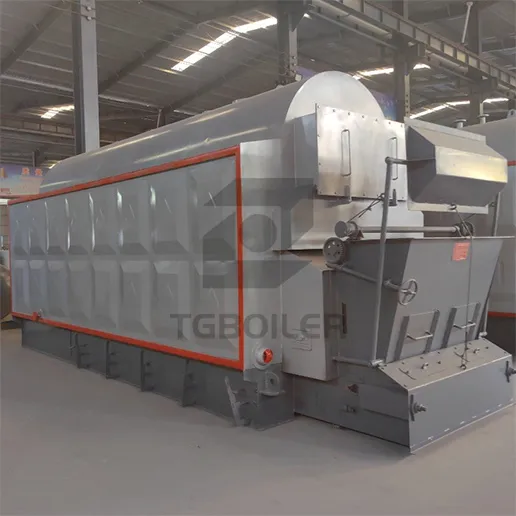
1. Atmospheric pollutant emission concentrations: Such as nitrogen oxides, sulfur oxides, particulate matter, etc., serving as direct metrics for assessing a boiler's impact on air pollution.
2. Thermal efficiency: Measures the boiler's ability to convert fuel energy into useful thermal energy. Higher efficiency means lower fuel consumption and greater environmental friendliness.
3. Fuel consumption: The amount of fuel consumed per unit of output (e.g., steam tonnage), directly impacting resource utilization and carbon emissions.
4. Flue gas temperature: Low-temperature flue gas represents potential for waste heat recovery. A lower flue gas temperature indicates higher thermal efficiency and reduced energy waste.
These four metrics collectively form a framework for evaluating a boiler's green, low-carbon, and high-efficiency performance, aligning with national “dual carbon” goals and high-quality development requirements.
If you are looking to find eco friendly boiler, please contact the TGBOILER team for a free, customized solution and quote.
Email: info@taiguoboilers.com WhatsApp: +86 13598899826
Tel/Fax: 0086 371 63311291
WhatsApp/WeChat: 0086 13598899826
Email:info@taiguoboilers.com
Add: No.6 Zone, North Side of Konggang No.6 Road, Airport Economy Zone, Zhengzhou City, Henan Province, China




 0086 13598899826
 0086 13598899826
 info@taiguoboilers.com
