
Time: 2025-10-23 Click: 514 seen
In the industrial field, boilers are categorized into vertical and horizontal types based on their structural design. so that,these two boiler types differ in heating methods, installation requirements, operational performance, and other aspects.
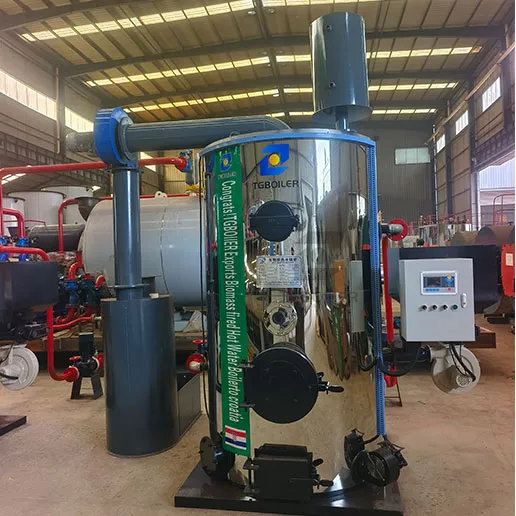
Small water volume enables rapid temperature and pressure rise, high thermal efficiency, and fast steam production, making them suitable for small to medium-sized heating demands.
Compact structure with minimal footprint facilitates easy relocation and installation, ideal for spaces with limited area or small-scale steam equipment.
Relatively low procurement costs alleviate financial pressure.
Equipped with automated control systems for enhanced safety performance.
Energy-efficient operation with low noise levels.
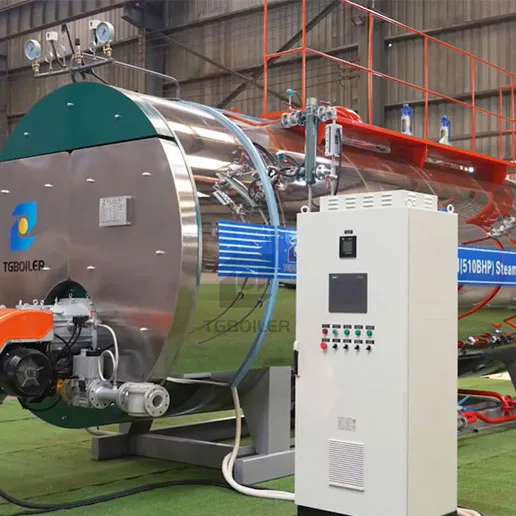
Large water capacity, rapid steam generation, high thermal efficiency, and ample steam supply.
Safety and reliability: Utilizes intelligent control systems with multiple safety protection devices.
High-efficiency operation, extended service life, and low noise levels.
Wide applicability for industrial settings requiring substantial steam or hot water.
Compared to vertical boilers, horizontal boilers have higher procurement costs.
The primary distinction between vertical and horizontal boilers lies in steam consumption, which is primarily determined by thermal efficiency.
Vertical boilers are suitable for limited installation spaces or lower demand scenarios.
Horizontal boilers are recommended for expansive sites or high industrial steam requirements.
In summary, both vertical and horizontal boilers offer distinct advantages. Customers should select the appropriate boiler type based on their specific operational needs.
For more information about boilers, please contact:
Email: info@taiguoboilers.com
WhatsApp: +86 13598899826
Tel/Fax: 0086 371 63311291
WhatsApp/WeChat: 0086 13598899826
Email:info@taiguoboilers.com
Add: No.6 Zone, North Side of Konggang No.6 Road, Airport Economy Zone, Zhengzhou City, Henan Province, China




 0086 13598899826
 0086 13598899826
 info@taiguoboilers.com
